Do You Need a Triathlon Bike? A Beginner’s Guide
Gear desk 03 / Choose your first race bike
Do you need a triathlon bike for your first race? If you’re here for supporting evidence to buy the latest Canyon, you may be in for a surprise. Read on to think more rationally about the bike you really need today.
The quick answer
Do you need a triathlon bike for your first race?
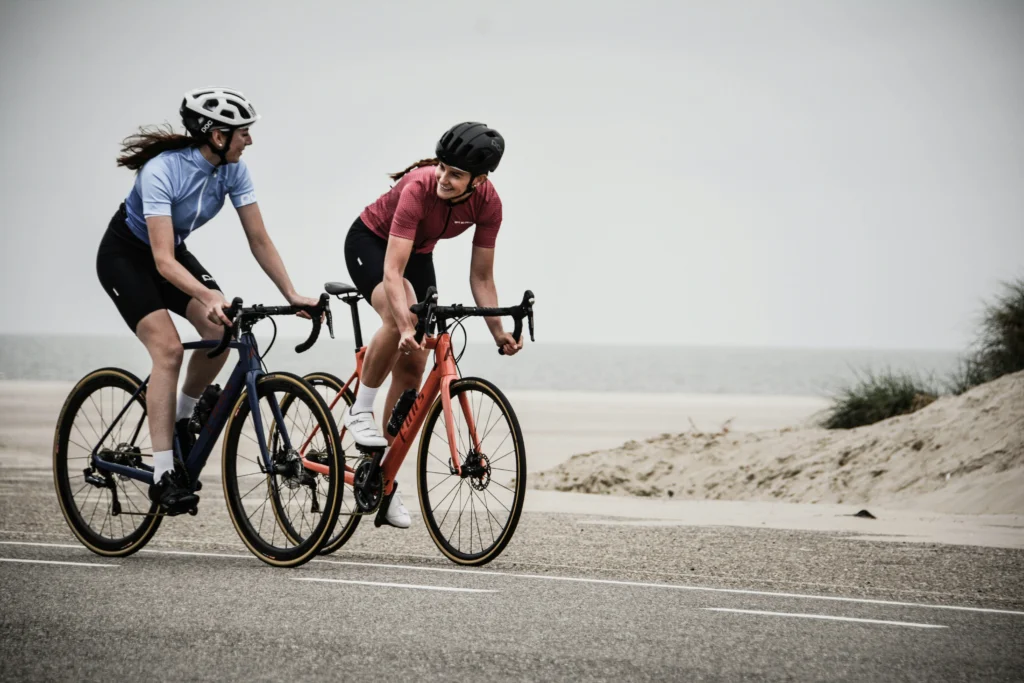
No. A triathlon bike is not required for most first races. Beginners commonly use road, hybrid, gravel and mountain bikes. A familiar bike is often the better choice because you already know how it steers, shifts and stops.
The bike should fit reasonably well, brake and shift properly, suit the course and meet the event rules. Have it checked early enough to fix problems and ride it in training before race day.
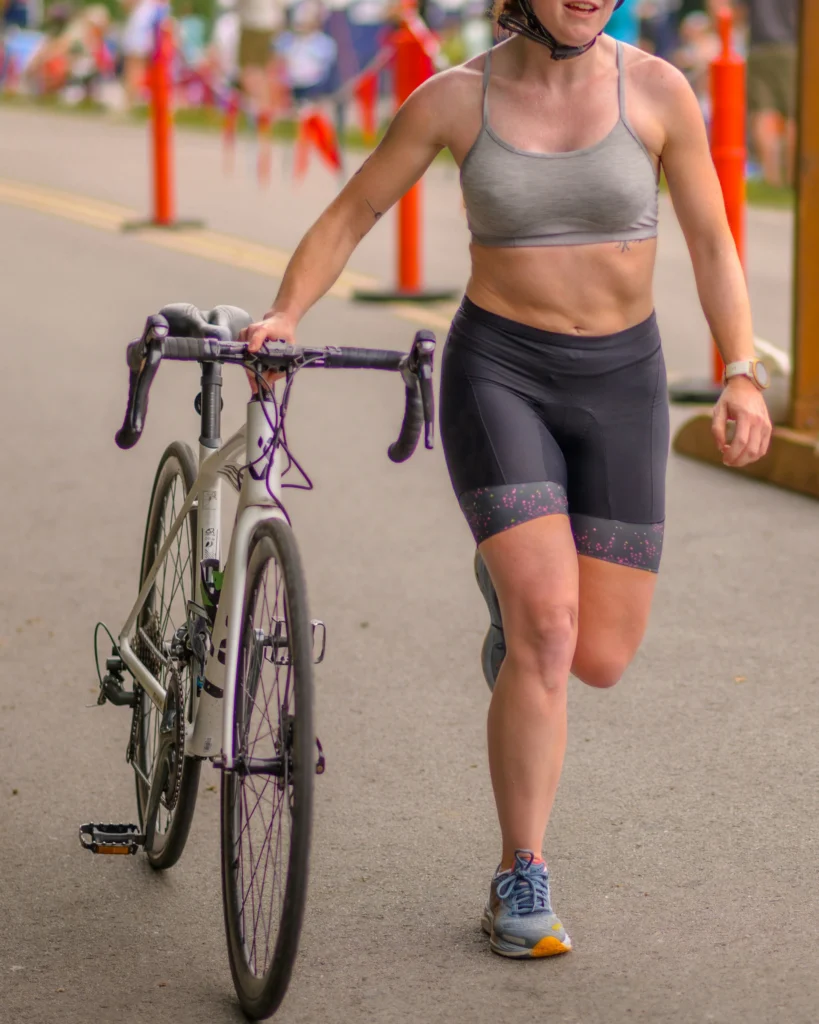
My first triathlon was on a second-hand cyclocross bike. It was not the fastest bike in transition, but I knew how it handled and I trusted it. That mattered more than owning a bike that looked the part.
A dedicated time trial bike, usually called a TT or tri bike, can be useful. It makes sense when you race non-drafting events regularly, care about speed and can hold the aero position without giving up control or comfort.
The bike you already own may be enough
Beginner triathlons are not reserved for one type of bicycle. Match the bike to the event, the surface and the riding you want to do after the race. The athlete guide has the final say.
| Bike type | Good for a first triathlon? | What to know |
|---|---|---|
| Hybrid | Yes, especially at a short community race | The flat bar and upright position feel familiar. It is slower on pavement than a road bike, but speed is not the first-race test. |
| Road | Yes for many beginners | Efficient on pavement and useful for training, group rides, hills and triathlon. |
| Gravel | Yes for many beginners | Stable on rough roads and mixed surfaces. Use tires that suit the course and test them before race week. This is a good all-around bike. |
| Mountain | Often at community events | Slow on pavement because of the tires and suspension, but it can still get you to the finish. It is the right tool for a cross triathlon. Check course cutoff times before using a mountain bike. |
| Triathlon | Yes in many non-drafting races | Purpose-built for an aero position. It takes more practice and is not permitted in every race format. |
The athlete guide wins. Community events may use different equipment rules. Draft-legal races commonly prohibit TT bikes and clip-on aerobars, so check before entering and again before changing your setup.
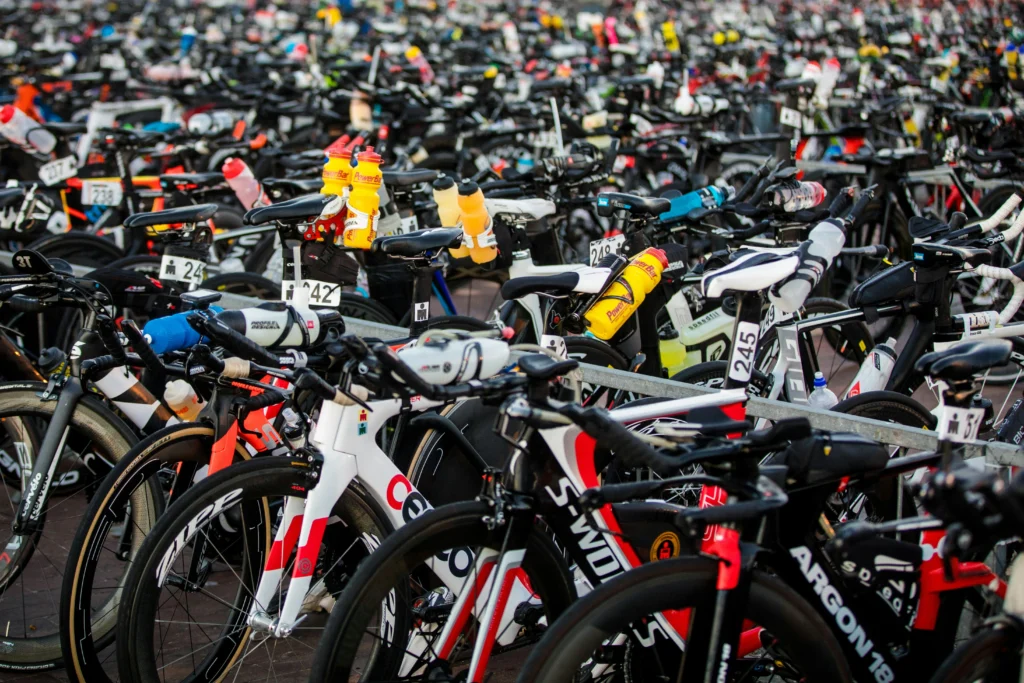
Road bike vs triathlon bike
The biggest difference is the riding position and what each bike is designed to do. One is not a more legitimate race bike than the other.
The all-rounder
Road bike
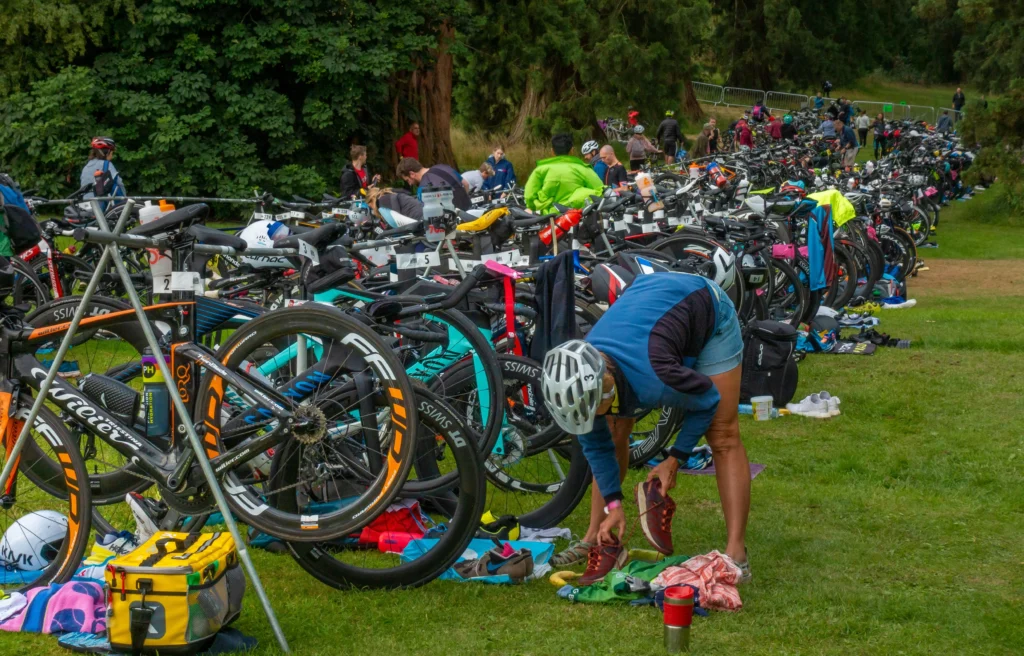
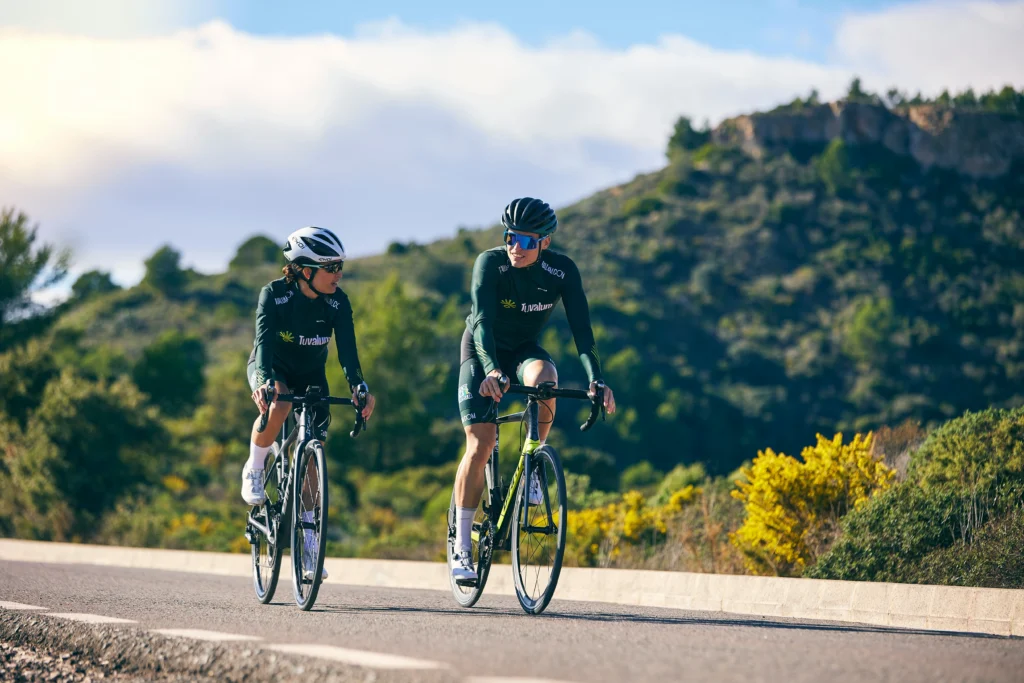
A road bike is made for varied riding. The drop bars work well for climbing, cornering, group rides and everyday training. The brake levers are close when your hands are on the hoods or drops.
- Versatile beyond triathlon
- Often easier to handle on technical roads
- May take clip-on aerobars when the handlebar and race rules allow
The specialist
Triathlon bike
A tri bike is built around an aero position with your forearms supported on pads. On a suitable course, a position you can hold may reduce drag. You must sit up to reach the brake levers on most setups.
- Purpose-built for non-drafting racing
- Rewards a careful fit and regular practice
- Less useful on a technical course, hilly terrain or traffic keep you off the extensions
What a tri bike cannot fix: missed training, poor pacing, weak handling skills, neglected maintenance or a frame that does not fit.
Does race distance change the answer?
A longer bike leg gives aerodynamics more time to matter, but it does not create a rule that says you need a tri bike. Road bikes are used at every distance. Comfort and control become more important as the ride gets longer. I’ve been beaten by someone on a road bike during a 160km bike race when I was on a TT bike, the key was my competitor had really strong legs. That matters quite a bit.
First short race
Sprint
The safe bike you already know is usually the practical choice.
| Bike | Road, hybrid, gravel, mountain or tri when permitted |
| Focus | Handling, basic maintenance and a smooth transition |
| Buy? | Usually not before race one |
Longer first race
Standard
A road bike offers a useful mix of speed, comfort and handling.
| Bike | Road bike is common, but another reliable bike can work |
| Focus | Comfort for the full ride and sensible gearing |
| Buy? | Only when your current bike creates a real limitation |
Middle + long course
70.3 or full
A road bike and a tri bike can both be sensible choices.
| Bike | Use the position you can control, hold and fuel from |
| Focus | Fit, pacing, storage and comfort over the full distance |
| Buy? | A tri bike makes more sense for repeated non-drafting racing |
The course may matter more than the distance. Open each note that matches the event you are considering.
Flat and open course
A tri bike or well-fitted clip-on aerobars may be useful because you can remain in a steady position for longer. Wind and your ability to control the bike still matter.
Hilly course
Suitable gearing, steady pacing and confidence on descents may matter more than the frame type. Pick the bike you can climb, brake and corner on without panic.
Technical course
Repeated corners, roundabouts and short descents can keep you away from the aero extensions. Many beginners feel more at ease on a familiar road bike.
Rough road or off-road course
Tire width, pressure, grip and control move up the list. Cross triathlons may require a mountain bike, while some mixed-surface events suit a gravel bike. Follow the event rules.
Should you add clip-on aerobars?
A middle step
Add the position, not just the bars
Clip-on aerobars can give a road bike a supported, narrower position without replacing the whole bike. They are not a universal upgrade, and bolting them on is only the first step.
- Confirm that your handlebar is approved for clamp-on extensions.
- Adjust pad width, reach, height and the rest of the bike fit.
- Practise looking ahead and moving smoothly back to the brakes.
- Sit up before corners, descents, rough ground or busy sections.
- Check whether the race allows aerobars before installing them.
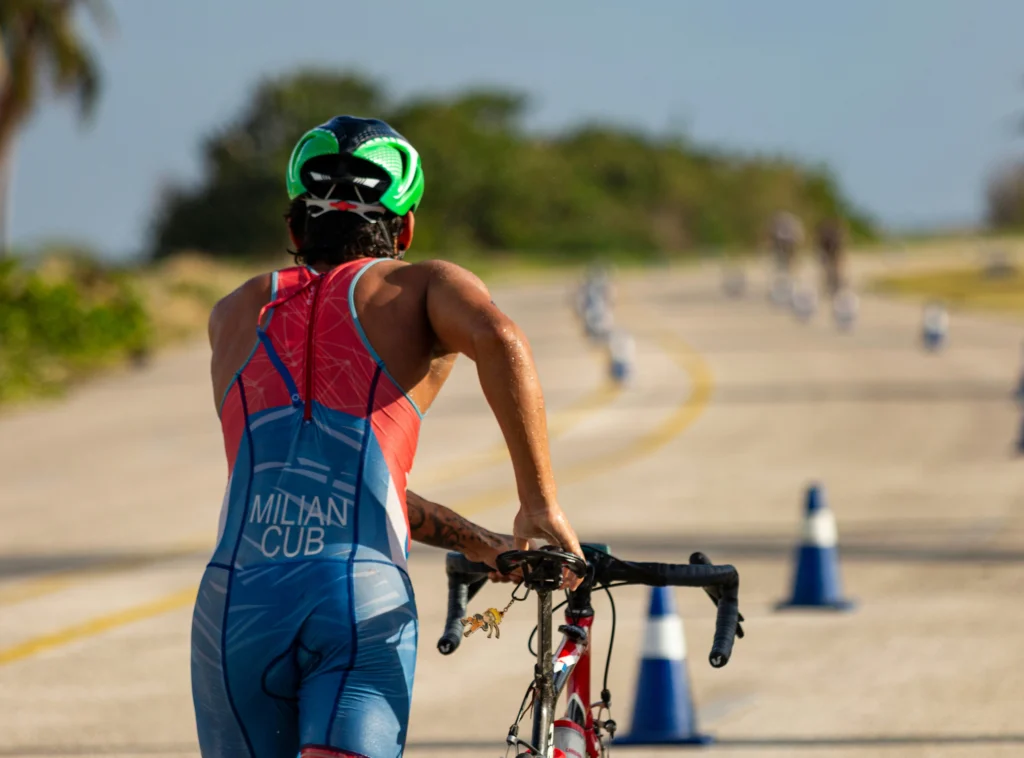
From my first races: I used clip-on aerobars for my first two years of racing before I bought a TT bike. That gave me time to find out whether I would actually use the position.
When a tri bike starts to make sense
You do not need to meet every point, but the purchase is easier to justify when most of these sound like you.
You know you enjoy triathlon
You have completed at least one race and want to keep going.
Your races suit the bike
They are usually non-drafting events with long, open bike sections.
You have a clear goal
You want to improve your time, not simply own more equipment.
You will practice on it
You have safe routes and will ride the bike between races.
The fit can work
The frame and front end have enough adjustment for your body.
The full cost fits
You can cover fitting, servicing, replacement parts and transport as well as the bike.
Buy a tri bike when it solves a real racing problem, not because transition made your current bike look ordinary.
Wait a little longer if the purchase would take money from training or race fees, you still need basic handling confidence, or you dislike the aero position.
What to spend money on before a new bike
A new frame is rarely the first bike expense a beginner needs. Start with the things that help your current bike work properly and help you ride it with confidence.
Service + helmet
Fix worn tires, brake pads, chain wear and poor shifting early enough to test the work.
Use a standards-approved helmet in good condition that fastens securely.
Fit + repair kit
Sort out saddle height, reach and any recurring discomfort before adding speed parts.
Carry an inflation method and repair supplies that match your wheels and tires.
Time on the bike
Practise shifting, braking, cornering, drinking and riding after the swim.
These skills transfer to every bike you may own later.
Flat pedals are fine
Clipless pedals are an option, not an entry requirement. Change pedal systems only when you have time to practice clipping in and out safely.
A fit can be worth more than a frame
Basic adjustments may be enough for a first race. A professional fit can help when discomfort continues or you are trying to build a sustainable aero position.
Buying a used tri bike without buying a problem
Second-hand buying desk
Fit and condition come before the logo
Used bikes can offer good value, but integrated front ends, hidden brakes and model-specific parts can turn a bargain into an expensive project.
- Ask for the exact model, year and frame size.
- Ask directly about crashes, repairs and service history.
- Budget for a pre-purchase inspection by a qualified bike shop.
Open these checks while you inspect the bike.
Confirm the exact size and geometry
Compare the maker’s geometry chart with a bike that fits you. Do not buy a frame that is “almost” your size and expect an extreme stem or saddle position to rescue it.
Ask about crashes and repairs
Ask whether the bike has been crashed, damaged in transport or repaired. No service history is a reason to budget for a careful inspection, not proof that the bike is unsafe.
Inspect the frame and fork
Look for impact marks, deep scratches, cracks, unusual paint lines and movement at joints. A quick visual check cannot prove that carbon is sound, so let a qualified shop assess anything uncertain.
Check the adjustment range
Make sure the saddle, pads and extensions can move far enough for you. Confirm that the required spacers, clamps and proprietary hardware are included.
Test brakes, wheels and shifting
Check that the wheels run true, bearings turn smoothly and every control works. Electronic systems should charge and shift from each button. Price worn parts before agreeing on a number.
Price the missing pieces
Chargers, arm pads, storage boxes, hydration parts, stems and seat-post hardware may be costly or hard to find. Confirm availability before treating the asking price as a bargain.
Prefer a bike you can service
For a first tri bike, simple adjustment and common parts are valuable. A less exotic bike that a local shop knows how to service can be easier to own.
Know when to walk away
Leave if the size is wrong, the seller hides damage, key parts are unavailable or the final cost approaches a better complete bike. Another used bike will come along.
Common beginner bike mistakes
Buying before choosing a race
The surface, hills and draft rules should shape the equipment choice.
Chasing the lowest position
Lower is not faster when you cannot look ahead, breathe normally or hold steady power.
Changing kit on race week
Test new bars, tyres, shoes, saddles and bottle systems in training.
Skipping handling practice
Aero speed is little help if every corner or descent makes you tense.
Equating price with comfort
Comfort comes from suitable sizing, adjustment and time in the position.
Ignoring the athlete guide
Rules change with race format and organizer. Read the current guide.
A simple bike decision guide
Use your current bike
It is safe, familiar, suitable for the course and allowed by the race.
Choose a road bike
You want one bike for triathlon, group rides, hills and general training.
Try clip-on aerobars
Your handlebar and race permit them, and you have time to adjust and practise the position.
Consider a tri bike
You race non-drafting events often, want more speed on open courses and will train on the bike.
Rent or borrow carefully
The bike still needs to fit, be mechanically sound and feel familiar before race day.
Frequently asked questions
Can I do a triathlon on a hybrid bike?
Often, yes. A hybrid can be a comfortable choice for a short community triathlon. Confirm the race rules, have it serviced and train on the same setup you will race.
Can I use a mountain bike in a road triathlon?
Many beginner events allow one. It will usually be slower on pavement, but it can still get you to the finish. Check the athlete guide before assuming.
Is a road bike good enough for a 70.3?
Yes. A tri bike may offer an aerodynamic benefit on an open non-drafting course, but a familiar road bike is a sound choice when it fits and you have trained on it for the full ride time.
Are tri bikes allowed in every triathlon?
No. Draft-legal races commonly prohibit TT bikes and clip-on aerobars. Equipment rules vary, so read the current athlete guide before entering or changing the bike.
Do I need clipless pedals?
No. Flat pedals can be a good starting point. Use the system you can operate safely, and practise any change well before race day.
Will a tri bike make me much faster?
It may make you faster when the fit is good and you can stay in the aero position on a suitable course. The result depends on your position, pace, wind, tyres and how often you must sit up.
Should I get a fit before buying?
A fit assessment can help narrow the frame sizes and adjustment ranges that may work. At minimum, compare geometry and confirm that the pads, extensions and saddle can be placed for your body.
Can I use an electric bike?
Do not assume so. Standard competitive divisions generally do not allow motor assistance, although some events may offer a separate inclusive category. Ask the organizer before registering.
How this guide was checked
This guide combines first-hand racing experience with current equipment guidance from World Triathlon, Triathlon Canada and USA Triathlon. Rules were reviewed in October 2026.
Community races can set their own equipment rules. The athlete guide and race briefing are the final authority for your event.
Sources: World Triathlon Competition Rules, Triathlon Canada age-group guidance and USA Triathlon draft-legal racing guidance.
Related guides for your first race
Start with the bike that fits your race now
Prepare it properly, build your handling skills and let your first race show you what is worth changing next.