How to Choose Your First Triathlon Race: Beginner Guide
Beginner Triathlon Guide
Your first triathlon should fit the swimmer, cyclist, and runner you are now. Distance matters, but so do the swim setting, course, travel, cost, and race rules.
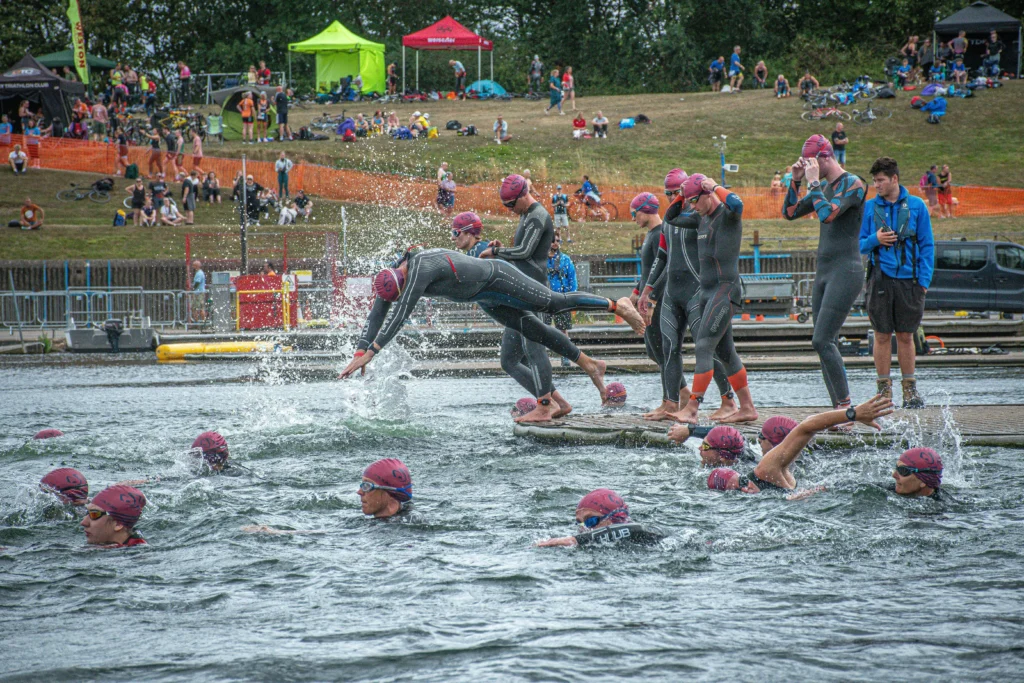
Image note: replace this placeholder with a wide race morning photo that shows the setting, water, and recreational athletes.
Jump to
Quick answer
A local super sprint or sprint is usually the most practical place to begin. A pool swim removes some of the unknowns when open water is your weak point. Before paying, check the course, swim start, cutoffs, rules, travel plan, and cancellation policy. Choose an open water race only when you can practice in similar water before race day.

Race calendars hide a lot. A 400 m swim might be in a quiet pool or a cold lake. A 20 km bike might be flat and simple or packed with hills and tight turns. A city event might also mean a hotel, paid parking, and bike check in the day before.
Start with distance, but do not stop there.
When I compare beginner races, I look for the fewest avoidable surprises. The event should still feel exciting, but the course and logistics should match what you can actually practice.
Step 1
Choose a distance that matches your starting point
A relay, super sprint, or sprint is usually the most practical place to start. A standard distance can work for someone who already has a solid base, but it asks for more training time, better pacing, and a longer day.
Do not choose from the race name alone. Write down what you can comfortably do in each sport today, then compare that with the course. A runner who already swims twice a week has a different starting point from someone learning to swim and ride outdoors at the same time.
| Race format | Common distance | Often suits | Think about |
|---|---|---|---|
| Relay | Relay formats vary. In many community races, team members split the swim, bike, and run. In mixed relay, each athlete completes a short triathlon before tagging the next athlete. | Athletes who want to learn the race setting with less pressure. | Check how the team is divided, along with exchange rules and timing. |
| Super sprint | About 400 m swim, 10 km bike, 2.5 km run. | Beginners who want a shorter first day, and younger athletes where the event permits. | The swim setting and course can matter more than the short distance. |
| Sprint | About 750 m swim, 20 km bike, 5 km run. | Many active beginners who can train in each sport. | A hilly or technical sprint can be harder than a flat race with similar distances. |
| Standard or Olympic | About 1.5 km swim, 40 km bike, 10 km run. | Athletes with a solid endurance base and enough time to prepare. | The longer day makes pacing and bike comfort more important. Depending on the event length and conditions, you may also need a plan for fluids or food. |
Race names and exact distances can vary. Pool based sprint races may use a shorter swim than an open water sprint. Always use the organiser’s course page and athlete guide as the final source.
Coach note
A first race should leave you curious about the next one. There is no prize for choosing the longest option on the registration page.
Step 2
Let the swim format guide your choice
For a new triathlete, the swim setting often matters more than the number beside the swim.
A pool gives you lane lines, walls, and a clear view of the bottom. Open water can add cold water, waves, glare, close contact, poor visibility, and the need to sight toward buoys. The same distance can feel very different.
Open water can still be a good first race. Just make sure it is not completely new on race morning.
Also check how the swim starts
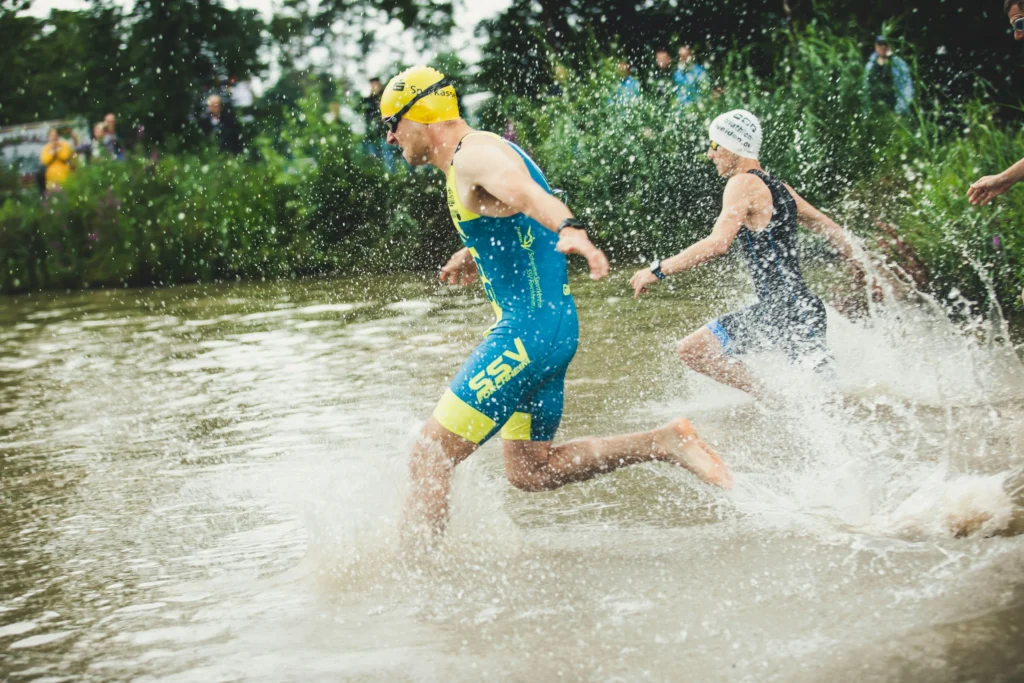
A time trial start when your timing chip crosses a line, usually one at a time. A wave start sends a group together. A mass start begins with a large group. A rolling start lets athletes cross the timing line during a set window, either in small groups or in a continuous flow. Some races also ask athletes to line up by expected swim time.
If close contact worries you, a start with more spacing may feel easier. Watch a past race video when one is available. It will tell you more than the words “open water swim.”
Coach note
Do not save your first open water session or first wetsuit swim for race morning. Practise in the same type of water when you can, and use the wetsuit beforehand if you plan to race in one.
Step 3
Read the whole course, not just the distances
A sprint is short. The course can still be hard.
Course details decide which skills you will need. Hills, turns, wind, rough pavement, trail sections, and repeated laps all change the day.
What to check on the bike course
- Elevation: Look for the total climbing and where the hills appear.
- Turns and descents: A technical course may require more confident braking and cornering.
- Road surface: Check for gravel, rough pavement, speed bumps, or narrow paths.
- Traffic control: Find out whether roads are closed, partly closed, or shared with traffic.
- Number of laps: Courses with several laps are easy to preview, but you need a simple way to keep count.
- Drafting rule: Do not assume you may ride close behind another cyclist. Follow the rules for that event.
What to check on the run course
- Road, path, grass, sand, or trail surface.
- Shade and likely heat exposure.
- Hills, stairs, sharp turns, and repeated loops.
- Water station locations.
- Whether walkers must stay to one side.

Image idea: use a real course photo where readers can see the road width, hills, or turns.
Course maps often flatten the story. Find the elevation chart and, when possible, look at the roads in satellite view. One athlete’s “fast course” may still feel demanding if you train on flat roads.
Simple course rule
For a first race, simple is useful. Clear turns, one transition area, and parking close to the venue give you fewer things to solve before the start.
Step 4
Choose logistics you can manage calmly
A short race can still take over the whole weekend.
A local event is often easier for a first try. You may be able to sleep in your own bed, look at the course before race day, practice at the swim site where permitted, and avoid travelling with a bike.
A destination race can be worth it, but add up the whole (long) weekend before you register.
Budget for the complete race
- Entry fee and taxes
- Provincial membership, one day membership, or event licence if required
- Hotel or campsite
- Fuel, flights, parking, or shuttle fees
- Bike transport or rental
- Extra fuel and food before and after the race
- Refund, transfer, or insurance options
Check when race kit pickup closes. Some events make you collect it the day before, and some require advance bike check in. Either rule may add another hotel night.
Work backwards from the start time. Can you park, unload, check in, set up transition, and reach the briefing without rushing? A 6:30 a.m. start can mean a very early alarm, especially when parking is off site.
Step 5
Read these details before you pay
The registration page tells you why to enter. The athlete guide tells you how the day works.
If this year’s guide is not posted yet, read the previous one. It can show the usual schedule and setup, but confirm every detail when the new guide appears.
First race registration checklist
- Exact swim, bike, and run distances
- Pool, lake, river, or ocean swim
- Start format and expected seeding
- Water temperature history and wetsuit rules
- Bike type, helmet, and equipment rules
- Drafting rule and passing instructions
- Course cutoffs and transition closing times
- Minimum age and category rules
- Membership or race pass requirements
- Packet pickup and bike check in times
- Refund, deferral, and transfer policy
- Weather change or cancellation policy

What is a cutoff?
A cutoff is the time by which you must reach a point on the course. An event may have a swim cutoff, a combined swim and bike cutoff, or a final finish cutoff. Most also close transition at a set time.
Compare the cutoff with your training pace, but leave room for transitions, hills, wind, crowding, and a slower race day. Ask the organizer how the cutoff is measured if the wording is not clear.
Look for signs of a well prepared event
I am more comfortable recommending a race when the current maps, schedule, rules, parking plan, and contact details are easy to find. A beginner briefing or supervised practice swim can also be useful when the event offers one.
Good information is not a safety guarantee, but it gives you something concrete to plan around.
Step 6
Give yourself time to prepare without panic
Choose a date that leaves room for ordinary life. You should be able to build gradually, miss a few sessions, and still avoid cramming at the end.
Start with your weakest sport. Can you learn what you need before race day? A strong runner who cannot yet swim one continuous pool length has a different starting point from a swimmer who has not ridden outdoors in years.
The timeline is more realistic when you can:
- Train in all three sports every week.
- Build the race distances gradually rather than cramming.
- Practise a few short bike to run sessions.
- Use the gear you plan to race in.
- Practise in conditions that are reasonably similar to the course.
- Include easier days and time to recover.
- Bonus – do over-distance on the bike. That 150%+ race distance effort will make your race feel much better.
When you are returning after a long break, managing an injury, or living with a health condition, get advice that fits your situation before setting a demanding goal.
Step 7
Pick the kind of race day you want
The atmosphere matters, especially when everything is new.
A small local race may be relaxed, easy to navigate, and full of club volunteers. A large festival may offer more spectators, signs, aid stations, merchandise, and a bigger finish line. It may also bring crowded starts, distant parking, and more rules.
You may also find women’s events, indoor triathlons, club races, family events, off road races, and relay options. One of these formats may suit you better than a large open event.
| Signal | Why it may help a beginner |
|---|---|
| Pool or calm water option | Reduces some of the uncertainty around the swim. |
| Time trial or rolling start | May create more space than a large group start. |
| Simple bike course | Lets you focus on pacing instead of sharp turns and complex directions. |
| Generous published cutoffs | Gives newer athletes more room to settle into the day. |
| Beginner briefing or clinic | Offers a place to ask basic questions without feeling behind. |
| Clear athlete guide | Makes planning easier and reduces last minute surprises. |
| Strong local club presence | You may find course previews, group practices, and people who know the venue. |
Use this tool
Compare two races with a simple scorecard
Forget which race looks more impressive. Compare which one you can prepare for without forcing the rest of your life around it.
How to use it: name both races, then choose one number for every question. A score of 1 means poor fit. A score of 5 means strong fit.
Common mistakes
What beginners often overlook
- Choosing the distance before checking the swim. A short open water race may be a worse fit than a slightly longer pool race.
- Assuming “sprint” means easy. The name describes distance, not hills, waves, wind, turns, heat, or road surface.
- Registering because friends chose the race. Your friends may be stronger swimmers, more confident cyclists, or able to train more hours.
- Ignoring cutoffs until race week. Cutoffs should shape your race choice and training from the start.
- Looking only at the entry fee. Travel, lodging, passes, parking, rentals, and bike transport can cost more than registration.
- Buying gear before reading the rules. Check helmet, wetsuit, bike, number placement, and equipment rules first.
- Picking a famous race over a practical race. A smaller local event may give you a calmer and more useful first experience.
Coach tips
Small checks that make the decision easier
- Look at past results. They can show the size of the field and the broad range of finishing times. Detailed results may also include splits, withdrawals, or cutoff information.
- Read the previous athlete guide. It often answers more than the current registration page.
- Email one clear question. Ask exactly how the cutoff, swim start, or equipment rule works. A specific question is easier to answer than a long list.
- Check the course in satellite view. You may spot narrow roads, repeated turns, trail sections, or a long walk from parking.
- Ask a local club. People who have raced the event can explain details that maps miss.
- Know who will be there. A friend at the finish, a relay teammate, or a familiar club member can make the venue feel less strange.
- Keep your first goal simple. Learn the flow of swim, transition, bike, transition, and run. Time goals can wait.
Final test
Before you register, talk yourself through the morning from parking to the finish line. If you can explain where to go, when transition closes, how the swim starts, and what the course asks of you, the race is probably a workable choice.
Keep planning
Related beginner triathlon guides
Replace the links and images below with your own articles as the site grows.


Frequently asked questions
Choosing your first triathlon race
What is the best triathlon distance for a beginner?
Most beginners narrow the choice to a relay, super sprint, or sprint. Pick between them by looking at the swim setting, course, training time, and cutoffs. A short open water race may still be harder for you than a slightly longer pool event.
Should my first triathlon have a pool swim or open water swim?
A pool swim may be the better fit when you are new to swimming or cannot get safe open water practice. Open water can work when you have practised in a similar setting, can cover the distance without a wall, and understand the start and wetsuit rules.
Is a sprint triathlon always easy?
No. Sprint refers to the distance. Hills, wind, waves, rough roads, technical turns, heat, and tight cutoffs can make one sprint much harder than another.
Can I use a regular bike in my first triathlon?
Many beginner events accept a road, hybrid, or mountain bike. The bike still has to meet that event’s rules and be in safe working order. Check the guide before registering, and have the bike inspected if you are unsure about its condition.
How far in advance should I register?
There is no set number of weeks that works for everyone. Register after you have checked the course, rules, cutoffs, full cost, and cancellation terms. The date should leave enough time to build gradually in all three sports without cramming.
Do I need a wetsuit for my first triathlon?
The answer depends on the event rules, swim distance, age category, and measured water temperature. A wetsuit may be allowed, required, or forbidden. Check the current guide and use the wetsuit before race day if you plan to wear one.
What if I am worried about making the cutoff?
Find the exact cutoff and ask how it is measured. Compare it with your steady training pace, then allow time for transitions, hills, weather, and crowding. A different course or shorter format may give you a more relaxed first experience.
Can I walk during the run?
Walking is permitted under World Triathlon run rules, but you still need to follow the event’s course rules and meet its cutoffs. A planned run and walk approach can be sensible for some beginners.
Once you choose the race, build the next step
Start with a plan you can repeat most weeks. Include swimming, cycling, running, a few bike to run sessions, and some practice in conditions that resemble the course. Use the gear you already know, then fill only the gaps created by the race rules or course.
Editorial note: course details, race rules, cutoffs, water conditions, and equipment requirements can change. Confirm all final information with the organiser and the current athlete guide before race day.