How to Pace Your First Triathlon: Swim, Bike and Run Plan
Your first triathlon does not need a complicated pacing chart. The aim is to keep the swim and bike controlled enough that you can still run well. This guide gives you a simple plan for every leg, including transitions.
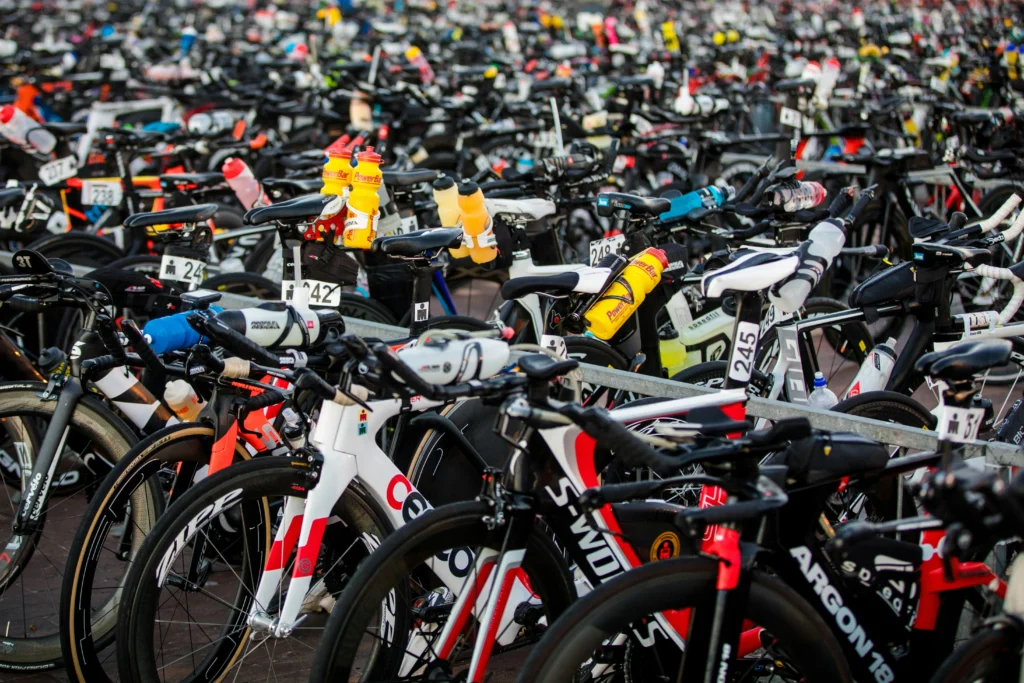
Quick answer: hold back at the start of every leg
For many beginners, the easiest plan to manage is to begin each leg about one effort level below what feels possible. Settle your breathing in the swim. Keep the bike easy enough that starting the run still feels realistic. Increase the run effort only after your legs have adjusted.
For many first time athletes, 5 to 6 out of 10 is a useful starting range for much of the race. Let the effort rise to 7 or 8 midway through the run only when you still feel steady. Hills, wind, rough water, and corners will change your speed. Try to keep the effort more even than the pace number.
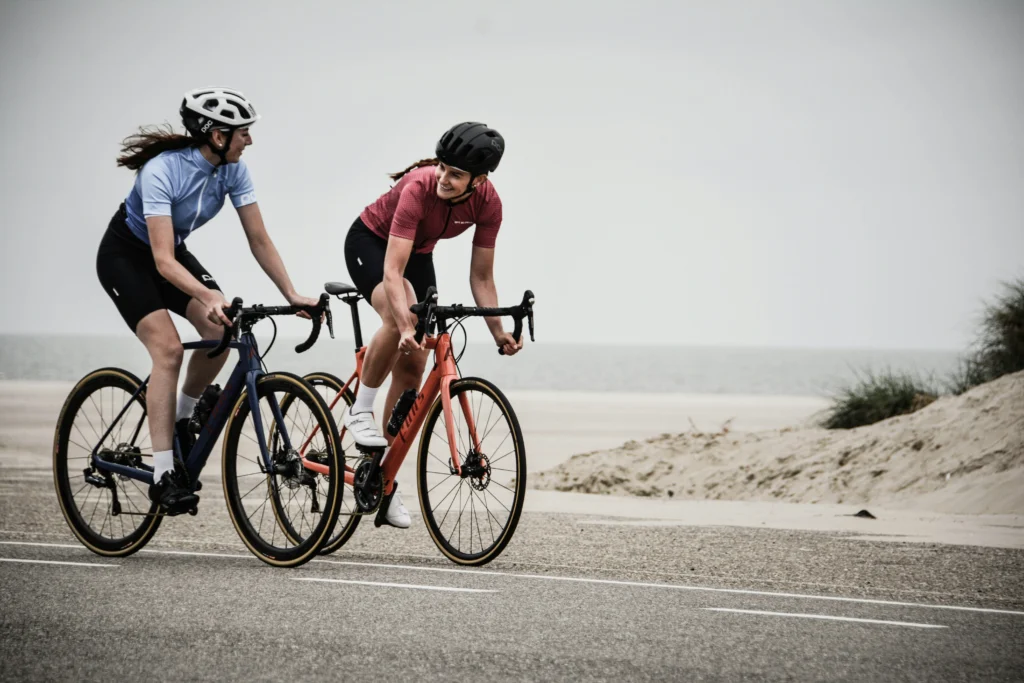
The first pacing rule: save something for the run
Pacing a triathlon is not the same as setting three separate personal bests. The swim changes how you feel on the bike. The bike changes how you run. A fast bike split can look good on paper and still lead to a slower finish if you spend the run walking much earlier than planned.
Your first job is to spread your effort across the whole race. Let faster swimmers move ahead. Let stronger cyclists pass. Ignore the runners who charge out of transition. Their pace has nothing to do with the plan you practiced.
This guide is written mainly for sprint and standard distance races. A sprint is commonly 750 metres of swimming, 20 kilometres of cycling, and 5 kilometres of running. A standard race, often called Olympic distance, is commonly 1,500 metres, 40 kilometres, and 10 kilometres. Local beginner events may use shorter or slightly different courses, so check the athlete guide for your race.
Still deciding which event to enter? Read the guide to choosing your first triathlon race.
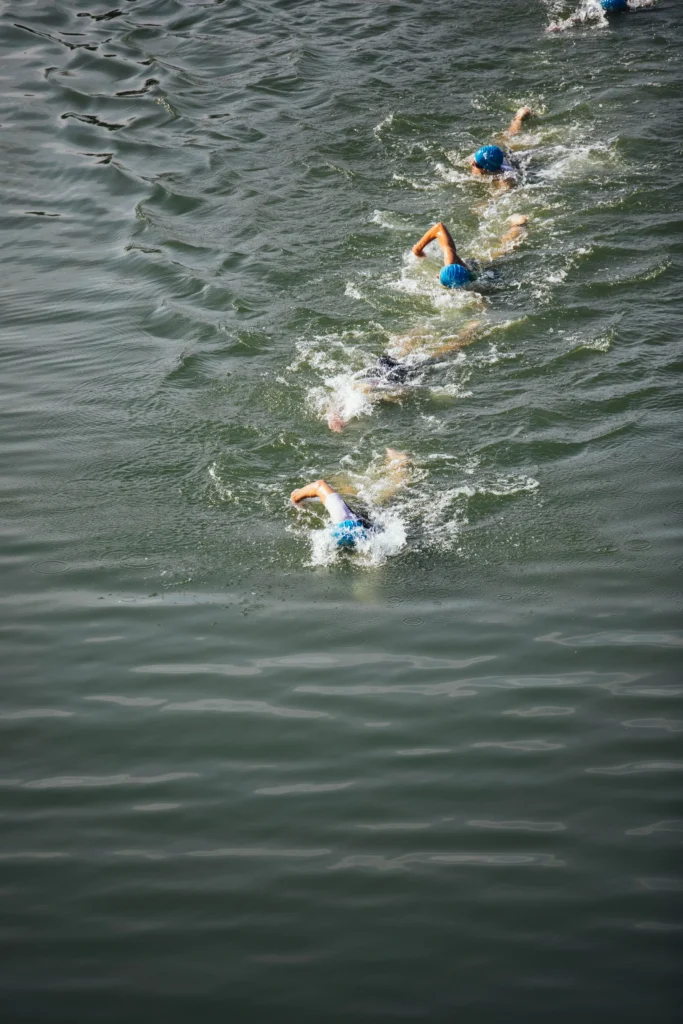
Settle first. Speed comes after your breathing is under control.
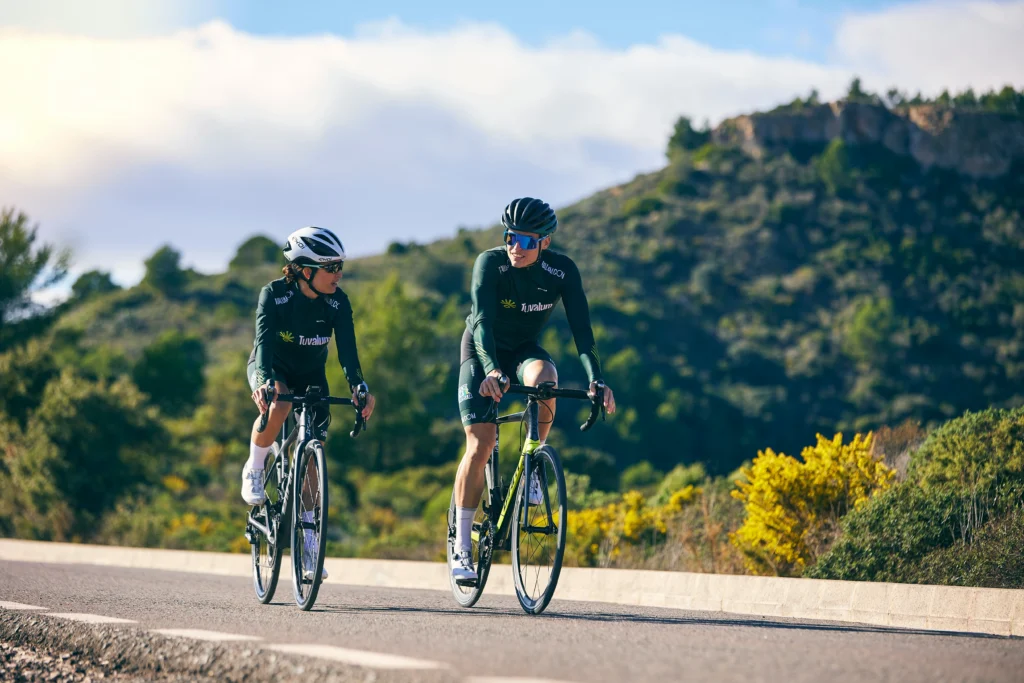
Ride the course in control, not every hill as a separate race.
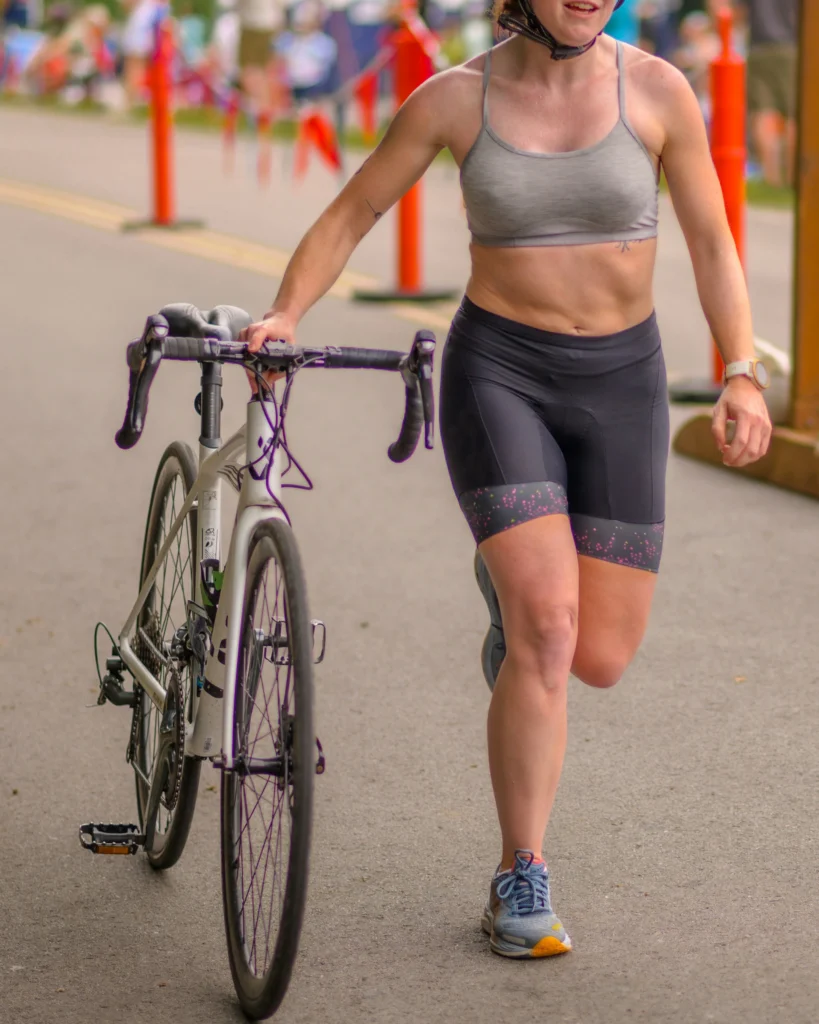
Give your legs time to change from cycling to running.
Use effort, not a perfect pace number
Pool pace, bike speed, and your pace on a fresh run may not match race day. Open water can be rough. The bike course may be windy or full of turns. The run begins after two other sports. A simple effort scale is easier to use when those numbers change.
For this guide, use a simple effort scale from 1 to 10. One is almost no effort. Ten is an all out effort you could hold only briefly. The number is personal. A pace that feels like 5 out of 10 to one athlete may feel like 8 to another.
| Effort | What it feels like | How it fits a first triathlon |
|---|---|---|
| 2 to 3 | Very easy. Breathing is calm. | Warm up, settle nerves, or recover after a brief surge. |
| 4 | Comfortable and smooth. | A sensible opening effort when the swim or course feels crowded. |
| 5 | Steady working effort. You feel in control. | A useful early race effort and a good starting point for a standard distance race. |
| 6 | Firm but sustainable. You need to pay attention. | Where many beginners spend much of a sprint race once settled. |
| 7 | Hard. You can hold it, but not all day. | Best saved for later in the bike or run when you know you are coping well. |
| 8 to 10 | Very hard to all out. | Save this range for the closing part of the run, if you still have energy to use. |
Coach note
Use your watch as a check, not a command. If heart rate is higher than expected, nerves, heat, caffeine, or a rushed start may be part of the reason. Check your breathing and form before changing the whole plan.
How to pace the swim
Many first time athletes swim the opening minute too hard. Adrenaline hides the effort for a short time. Once it catches up, breathing becomes rushed and the rest of the swim is spent trying to settle down.
Start at about 4 to 5 out of 10. Focus on a full exhale into the water and a stroke you can repeat. Once your breathing settles, move toward 5 to 6 out of 10. You should leave the water feeling that you worked, but not as though the race is already half over.
A simple first swim plan
- First two minutes: Give yourself space and find a breathing rhythm.
- Middle of the swim: Hold a smooth effort. Sight often enough to stay on course.
- Final 100 metres: Keep the effort controlled. Unless the swim finish is very close and you still feel good, there is little to gain from reaching transition out of breath.
- If you feel crowded: Move slightly to the side, shorten your stroke for a few seconds, and protect your rhythm.
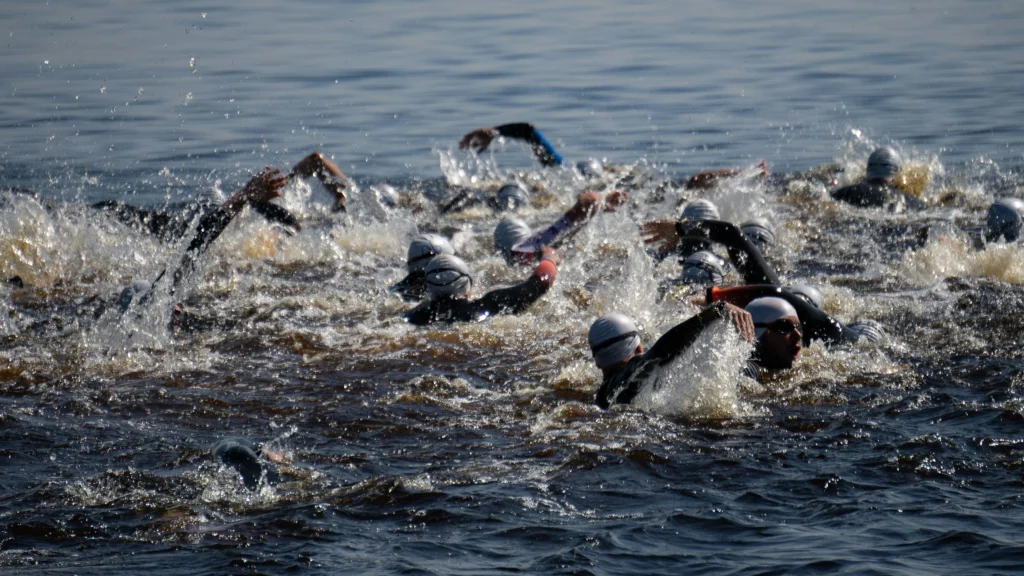
Choose a start position that matches your swimming, not the front row. Starting toward the side or behind the fastest swimmers may give you clearer water. At a pool triathlon, give an honest estimated swim time if the organiser asks for one. It may be used to place swimmers of similar speed together.
For more help with sighting, starts, and breathing, see these open water swimming tips.
Pace the first transition without rushing
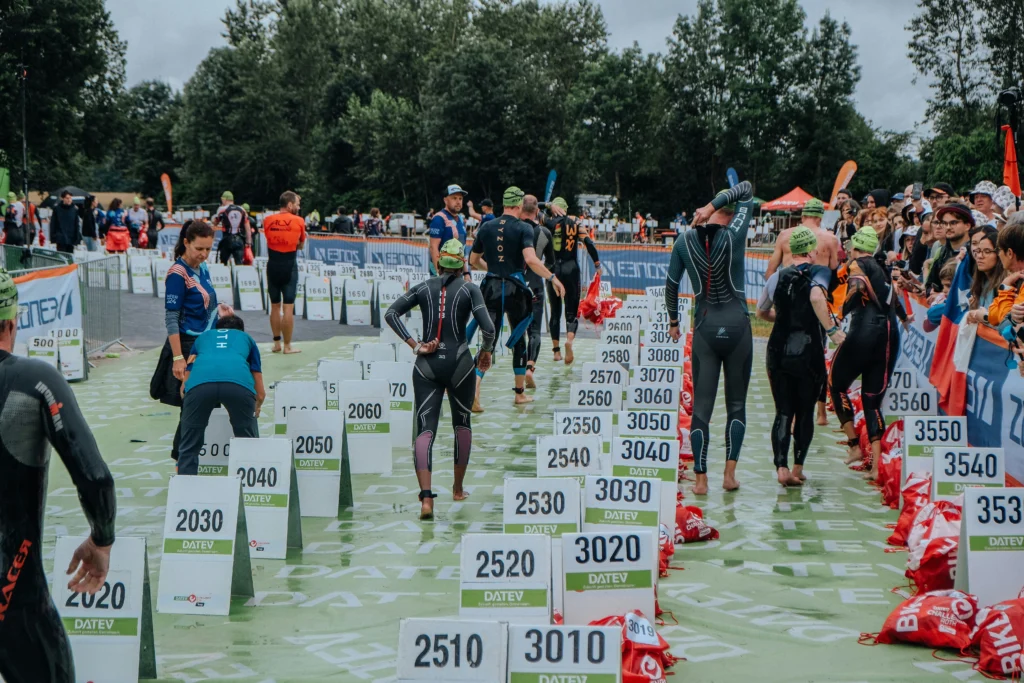
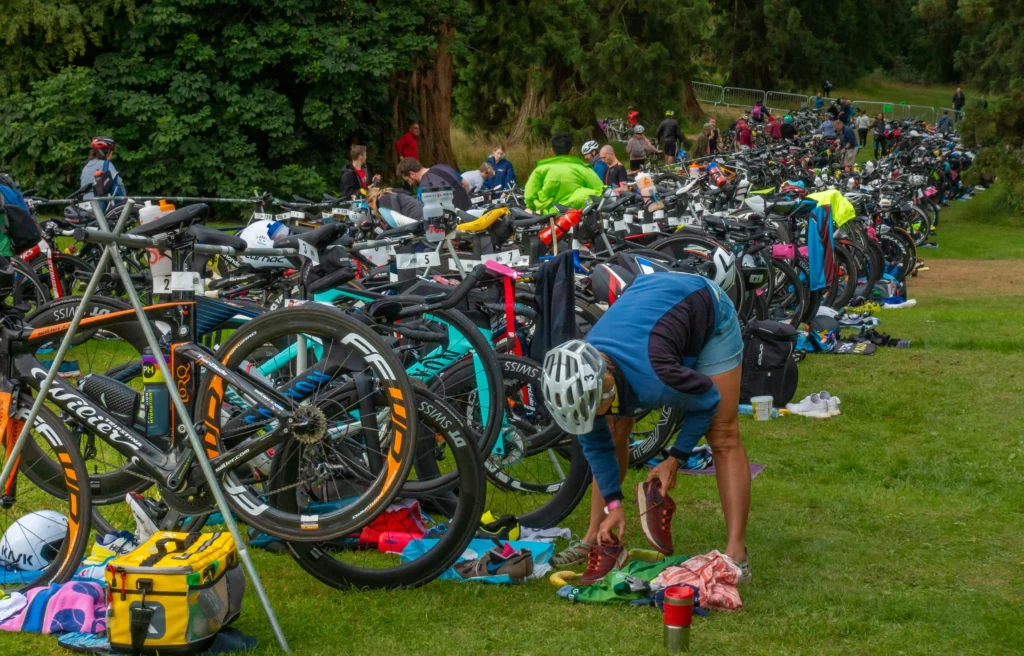
Transition one counts toward your finish time, but there is no need to panic through it. Stand up carefully after the swim, take a breath, and move through the steps you practised. Rushing can lead to a missed bike row, dropped gear, or a forgotten helmet strap.
Put on what you need and fasten your helmet before removing the bike from the rack. Push the bike to the exit and mount only after the mount line. Check the athlete guide because the transition setup and instructions can differ by race.
Coach note
Walk through transition before the race. Count the rack rows or choose a fixed landmark that will not disappear when bikes leave. The view can look very different when you return from the swim.
How to pace the bike
The bike often feels easier than it really is. You are moving quickly, other riders are passing, and the run still feels far away. This is where many beginners spend too much energy without noticing.
Ride the first five to ten minutes near 5 out of 10. Let your breathing settle and check that your legs feel normal. Through the middle of a sprint, many beginners can hold about 5 to 6 out of 10. For a standard distance race, stay closer to the lower end unless you have practised a stronger effort in training.
Near the end of the bike, ask yourself whether you could begin running at the current effort. If the answer is no, ease off. If the answer is yes and you still feel smooth, a small increase may be reasonable.
Ride hills by effort
Let your speed drop on the climb. Shift to an easier gear before the hill becomes steep and keep the effort from jumping too high. Ease over the top before building speed again. On the descent, ride within your skill level and avoid forcing a heavy gear.
Coach note: if you have a power meter, studies show you are faster doing +5%W uphill and into the wind and -5%W down-wind and downhill.
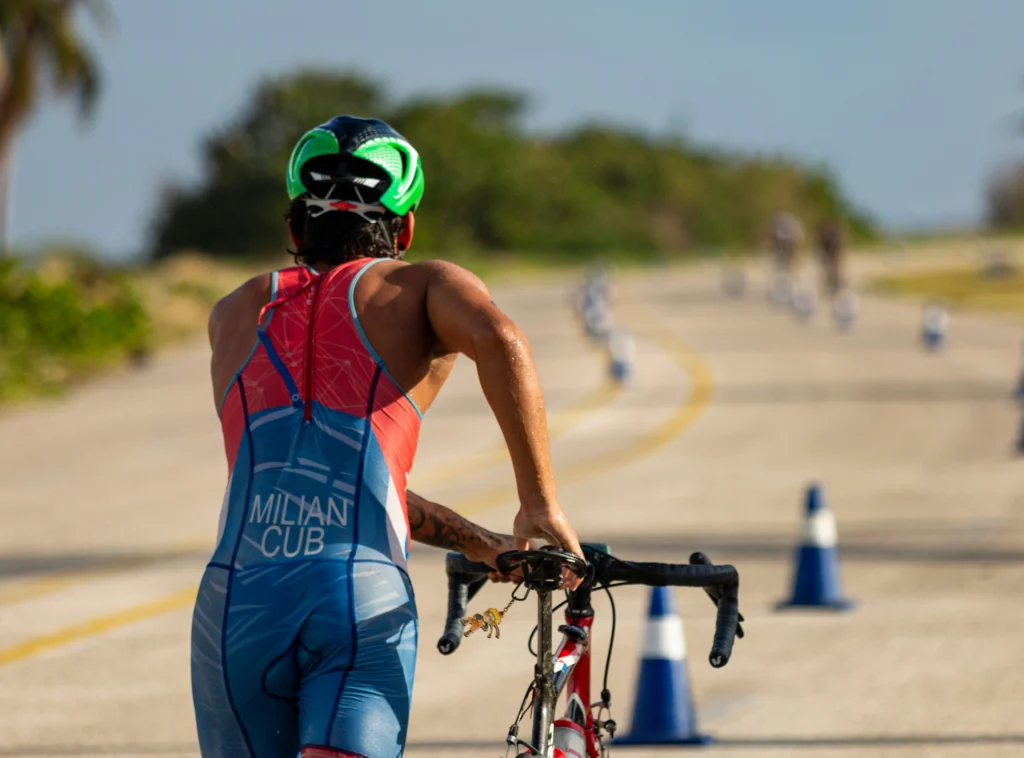
Do not copy another rider’s pace
You will pass some riders and others will pass you. They may be stronger, racing a different distance, or simply starting too hard. Stay with your own effort instead of chasing the next wheel.
Under World Triathlon rules, age group standard distance races are draft illegal, while age group sprint races may be draft legal or draft illegal. Local races can use different sanctioning rules. Read the athlete guide and briefing, then follow the stated spacing and passing requirements.
Stick with the food and drink you used in training. Race day is not the time to add an unfamiliar gel, bottle mix, or aid station item just because it is available.
Use the second transition to prepare the run
Ease the bike effort slightly during the final few minutes if the course allows it. Keep your legs moving instead of pushing a heavy gear to the dismount line. Dismount before the line, rack the bike, and let go of it before unfastening your helmet. Follow the directions in your athlete guide.
Once your running shoes are on, leave transition at a pace you can hold. A rushed first few hundred metres can make the opening kilometre much harder than it needs to be.
How to pace the run
The first few minutes of the run often feel awkward. Your stride may be short and your legs may feel heavy. This is common after cycling. Keep the steps light and give your legs a few minutes before deciding the run is going badly.
Start near 5 out of 10 for the first five to ten minutes. Then move toward 6 if your breathing is steady. In the last third of the run, you can increase to 7 if you still have control. Save 8 or more for the final section when you are sure there is no long hill or extra loop left.
Break the run into three parts
- Opening section: Hold back while your legs adjust.
- Middle section: Find a repeatable rhythm and keep the effort even.
- Final third: Build only if your form and breathing are still under control.
- Finish: Use what remains once you know the distance left.
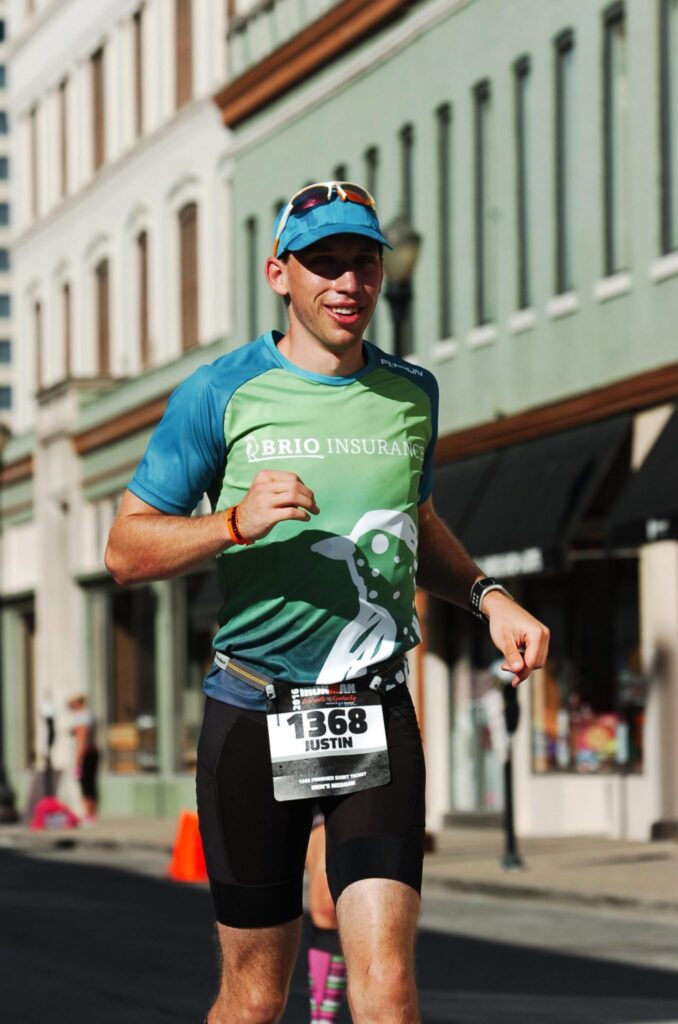
World Triathlon rules allow athletes to run or walk. A short planned walk through an aid station may help you drink and settle your breathing. Your own race may follow another rule set, so check the athlete guide, stay aware of athletes behind you, and keep to the course directions.
Coach note
Choose a run walk pattern before race day. You might run nine minutes and walk one, or walk each aid station. Look at the map and practice the pattern so the walk breaks feel like part of the plan rather than a last minute decision.
Sprint versus standard distance pacing
The same principle applies to both distances, but a standard distance race rewards more patience. These effort ranges are starting points, not rules. Adjust them to your training, the course, and the conditions.
| Race leg | First sprint triathlon | First standard triathlon |
|---|---|---|
| Swim | Start at 4 to 5, then settle near 5 to 6. | Start at 4 to 5 and hold a smooth 5 for most of the swim. |
| Bike | Begin near 5. Hold 5 to 6. Rise toward 7 late only if ready to run. | Keep most of the ride near 5 to 6. Avoid long surges on hills or into wind. |
| Run | Start near 6, settle at 7, then build toward 8 or 9 late. | Start near 5. Hold a steady 5 to 6, then build in the final few kilometres if able. |
| Main risk | Racing the first ten minutes too hard. | Letting small surges add up over a longer day. |
Common race formats are 750 m swim, 20 km bike, and 5 km run for sprint distance, and 1,500 m swim, 40 km bike, and 10 km run for standard distance. Confirm the exact course in your race guide because local events can vary.
Adjust for wind, hills, heat, and rough water
Do not chase the same speed in every condition. On a harder day, accept a slower split and keep the effort under control.
- Headwind: Stay smooth and let the speed drop. Do not expect to hold your calm weather pace, and do not try to make up the lost time with one hard surge.
- Hills: Let speed change. Keep the effort from jumping several levels at once.
- Heat: Start more conservatively, use the aid available, and follow the event’s safety directions.
- Cold or rough water: Give yourself more room, focus on breathing, and stop to signal for help if you feel unsafe.
- Crowded course: Choose safe lines and follow officials rather than forcing a pass.
If you feel unwell or unsafe, slow down or stop and tell a race official or volunteer. Finishing is not more important than your safety.
Build your race plan before race morning
Your race plan can fit on one page or a small card. It only needs to tell you what to do when the race becomes busy. Include these points:
- Your opening effort for the swim, bike, and run.
- One cue for each sport, such as “long exhale,” “light gear,” and “short steps.”
- Where you will eat or drink, using only a plan you have practiced.
- How you will handle hills, aid stations, and planned walk breaks.
- The rule you will use before increasing effort, such as waiting until the final third of the run.
- A backup plan for heat, wind, rough water, or a slower than expected split.
Practise the plan during a beginner brick workout. Keep the session controlled. Pay attention to how the bike effort affects the first ten minutes of the run.
A sprint triathlon training plan and a balanced triathlon training week will give you chances to test these effort cues before race day.
Common pacing mistakes in a first triathlon
- Starting with the fastest swimmers: You spend the first minutes fighting for space instead of finding rhythm.
- Chasing bike speed: Wind and hills make the speed number unreliable, so effort rises without you noticing.
- Racing every person who passes: Their plan has nothing to do with yours.
- Skipping the easy first minutes of the run: The legs never get a chance to settle.
- Trying new fuel or gear: You add a problem that could have been avoided in training.
- Using one target for every condition: A hot, windy, or hilly course may require a slower pace for the same controlled effort.
- Thinking a walk break means failure: A planned walk can be better than repeated stops after an overly fast start.
What to do when the plan goes off course
| What you notice | What to do next |
|---|---|
| Breathing is rushed early in the swim | Move to clearer water if possible, reduce effort, and focus on a long exhale. |
| Bike effort feels too hard in the first ten minutes | Shift easier, stop chasing speed, and wait for breathing to settle before making another decision. |
| Legs feel heavy at the start of the run | Slow down for several minutes, shorten your stride, and use a planned walk if needed. |
| Conditions are much harder than expected | Lower the target effort and judge the day by steady decisions, not the predicted finish time. |
| You missed a split goal | Do not try to win all the time back at once. Return to your effort plan and reassess later. |
A rough five minutes is manageable. Back off, settle your breathing, and return to the plan instead of trying to make up the time all at once.
Review the course flow before race day with these triathlon transition tips, and use a first triathlon checklist so pacing is not competing with forgotten gear.
Related beginner triathlon guides
Frequently asked questions
What effort should I use for my first sprint triathlon?
A good starting point for many beginners is about 7 out of 10 through most of the race. Begin each leg slightly easier, then increase only if you still feel controlled in the run.
Should I pace by heart rate, speed, or effort?
Effort is often the simplest main guide for a first race because it can be used in changing water, wind, and terrain. Heart rate and speed can support the plan, but check them against your breathing and form.
How hard should the swim feel?
The first minutes should feel deliberately controlled, around 4 to 5 out of 10. Once breathing is settled, many beginners can move toward 5 to 6. You should reach transition ready to ride, not needing several minutes to recover.
How do I know if I am biking too hard?
If you cannot imagine beginning the run at your current effort, the bike is probably too hard. Other warning signs include repeatedly surging on hills, chasing every rider, or needing a long recovery after each hard section.
Is it okay to walk during the run?
Yes. World Triathlon rules allow athletes to run or walk. Planned intervals or walking aid stations can be a sensible first race strategy, but check the rules for your event and practise the pattern in training.
Should I sprint out of transition?
Usually no. Move with purpose, but keep breathing and follow the equipment and mount line rules. A calm transition is more useful than saving a few seconds and starting the next leg too hard.
What if race day is hotter or windier than expected?
Lower your pace target and protect the same controlled effort. Follow event safety guidance, use the aid provided, and accept that a difficult day may produce a slower finish time.
Can I use this plan for a standard or Olympic distance race?
Yes, but stay closer to the lower end of the effort ranges and delay any increase until later. Standard distance is longer, so small early surges can have a larger effect on the run.
Try the pacing plan in training
During training, use a short bike to run session to test your opening run effort. Afterwards, write down the three cues you want to remember on race morning.